
Understanding wool
We love wool
And with good reason.
Wool is naturally thermoregulating: the crimped fiber structure traps air in microscopic pockets, which insulates against cold but releases heat and moisture vapor when the body gets too warm.
Wool is also naturally moisture-wicking: it absorbs moisture vapor from the skin and releases it into the air, keeping the wearer dry even during physical activity.
Wool has natural antimicrobial properties that inhibit odor-causing bacteria, meaning garments stay fresher for longer between washes.
But wool production can be very problematic
All materials have an environmental cost and for animal-derived materials like wool, leather and silk there are also serious animal rights concerns that can't be overlooked.
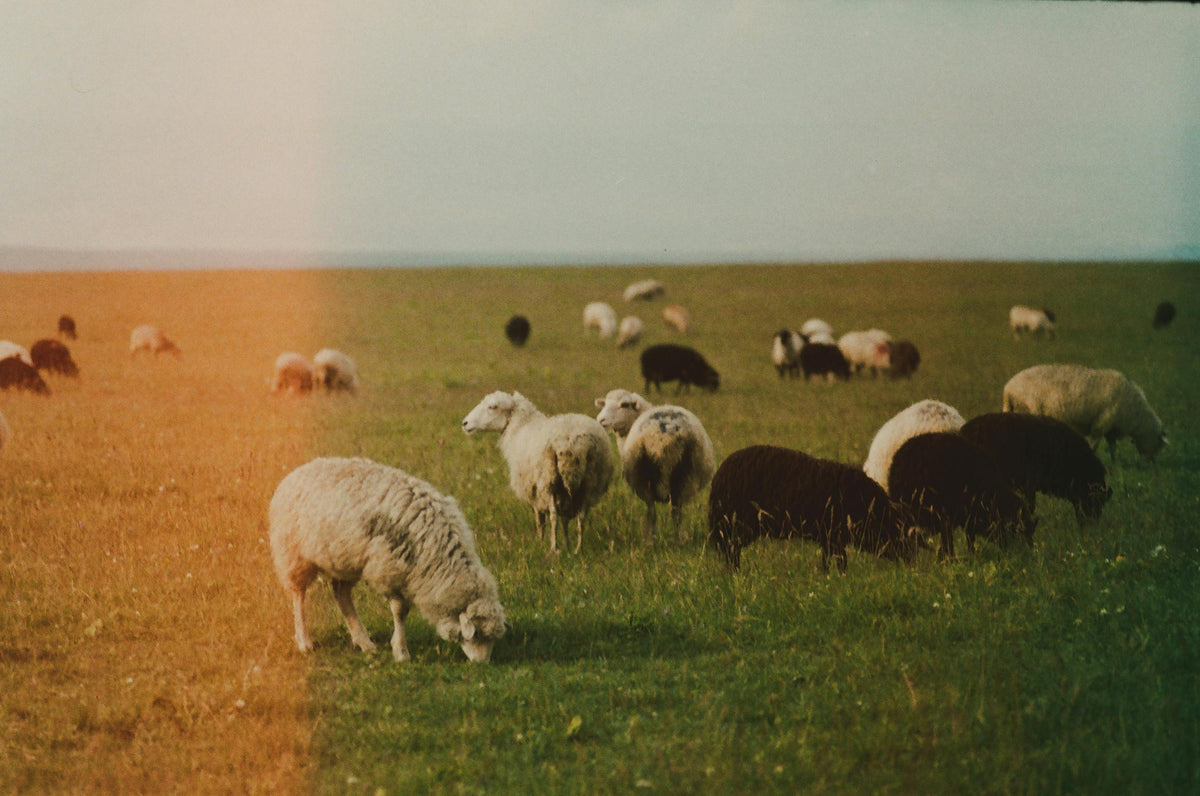
The main environmental concern around wool is land erosion and overgrazing. They are caused by sheep grazing the same piece of land for a prolonged period of time. Overgrazing means vegetation does not have enough time to grow back before being consumed. The soil becomes weak and vulnerable to erosion and desertification. Overgrazing can reduce soil carbon storage by up to 50%, diminishing the soil's ability to sequester carbon and contributing to climate change. Sheep also emit methane, a greenhouse gas with roughly 25 times the warming potential of CO₂.
Meanwhile, sheep farms may also have inhumane farming practices, such as mulesing. Mulesing is the practice of cutting chunks of skin from the hindquarters of sheep to prevent flystrike — a parasitic infection. Australia is the world's top wool producer and more than 70% of its wool comes from sheep who are mulesed.
Why we chose the RWS certification
The Responsible Wool Standard (RWS) is a voluntary international certification developed by the Textile Exchange. It certifies the entire wool supply chain to protect animal welfare, land health, biodiversity, worker's rights, and chain of custody.
Do you know the 5 animal freedoms?
The Five Freedoms were created by the UK's Farm Animal Welfare Council and are internationally recognized.
- Freedom from hunger and thirst, with access to fresh water and healthy diet
- Freedom from discomfort, with an appropriate environment
- Freedom from pain, injury or disease
- Freedom to express normal behavior, with sufficient space and company of the animal's own kind
- Freedom from fear and distress, with conditions and treatment which avoid mental suffering.
Critically, under the RWS, mulesing by any method is not permitted, and all farms are audited annually.
Even so, our first choice is always deadstock
Wool production — even when certified — has an environmental footprint: land use, water consumption, methane emissions from sheep, and the energy required to spin, weave, and finish fabric.
This is why our first commitment is to use deadstock: fabrics that were already woven and finished, sitting in stock. Using them does not create new demand for wool production. It gives an existing resource a first life rather than being shipped overseas to be destroyed or shredded to produce recycled yarn. And it gives us the opportunity to produce high quality pieces with luxury fabrics, without the four-figure price tag.
Read more